Things to do when bored at home with no phone
Free 3-page PDF. Cut, fold, drop in a jar.
60 boredom-jar slips to cut out: indoor and making ideas
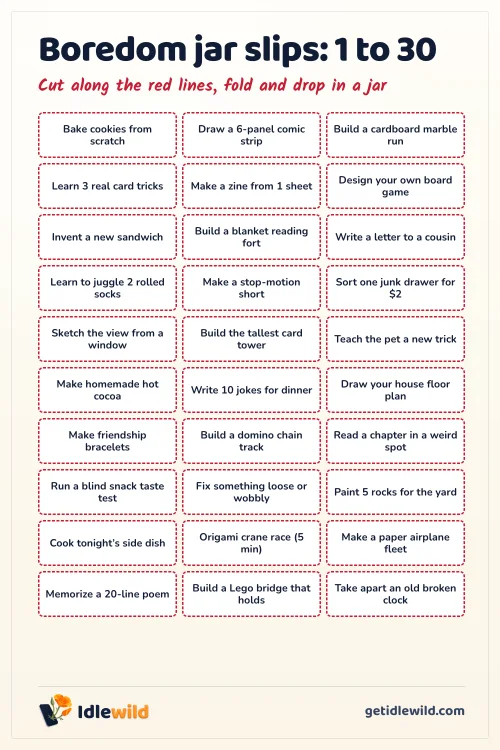
When screens shut off and a 10-year-old says there is nothing to do, a jar on the kitchen counter answers faster than a negotiation. Print the first sheet, cut along the red dashed lines, fold each slip and drop all thirty indoor ideas in the jar.
- Kitchen projects. Bake cookies from scratch, invent a new sandwich, make homemade hot cocoa, run a blind snack taste test, or cook tonight's side dish.
- Make and draw. Draw a 6-panel comic strip, make a zine from one folded sheet of paper, design a board game with real rules, sketch the view from a window, draw your house floor plan, or make friendship bracelets.
- Build and take apart. Build a cardboard marble run, construct the tallest playing-card tower, set up a domino chain track, build a Lego bridge that holds weight, make a paper airplane fleet, or take apart an old broken clock.
- Skills and mini-challenges. Learn three real card tricks, juggle two rolled socks, make a stop-motion short, memorize a twenty-line poem, write ten jokes for dinner, or teach the family pet a new trick.
- Quiet resets. Build a blanket reading fort, read a chapter in a weird spot, write a real letter to a cousin, paint five rocks for the yard, fix something loose, or sort one junk drawer for two dollars.
Outdoor, active and big-project slips
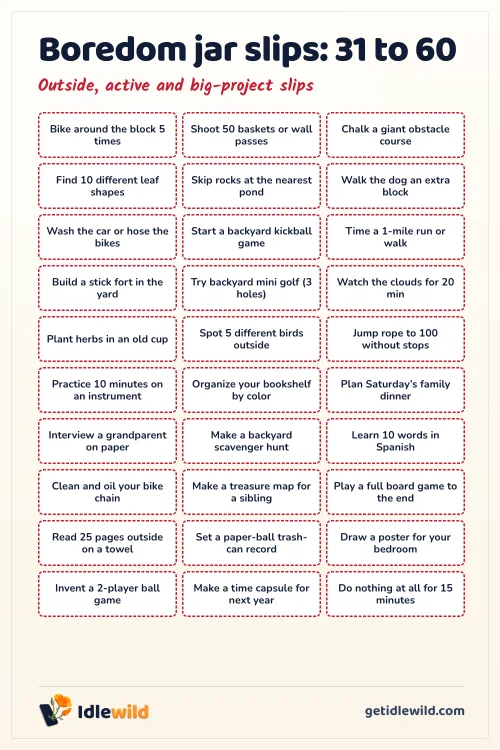
Sheet two adds thirty more cut-out slips built for burning energy outside, picking up a real hobby, or sinking an hour into a bigger project.
- Move outside. Bike around the block five times, shoot fifty baskets or wall passes, start a backyard kickball game, time a one-mile run or walk, jump rope to 100 without stopping, or walk the dog an extra block.
- Backyard and park. Chalk a giant obstacle course, find ten different leaf shapes, skip rocks at a nearby pond, build a stick fort, set up three-hole backyard mini golf, spot five different birds, or lie down and watch the clouds for twenty minutes.
- Practical independence. Wash the car or hose down the bikes, clean and oil your bike chain, plant herbs in an old cup, organize your bookshelf, or plan Saturday's family dinner.
- Big projects and people. Interview a grandparent on paper, make a backyard scavenger hunt or treasure map for a sibling, play a full board game to the end, learn ten words in Spanish, practice ten minutes on an instrument, or build a time capsule for next year.
- Space to think. Read twenty-five pages outside on a towel, draw a poster for your bedroom, invent a two-player ball game, or do nothing at all for fifteen minutes on purpose.
30 things to do when you're bored, taped to the fridge
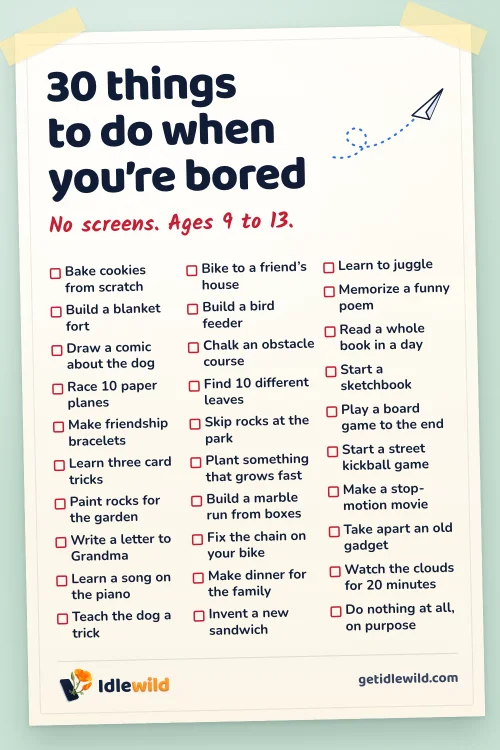
Prefer one sheet on the fridge instead of cutting slips? Page three of the PDF is our thirty-item checklist for kids 9 to 13, built around supplies already in the house, garage or park.
- Keep supplies within reach. Sketchbooks, good pens, cards, tape, cardboard and outdoor gear get used when they live out where a kid can grab them.
- Have the next thing ready. The American Academy of Pediatrics suggests having another activity ready to transition your child to when screen time ends.
- Let projects stay out overnight. Give half-finished comics, models or Lego builds one steady corner of a table so kids come back to them tomorrow.
- Let them pick the slip. Pulling their own card from the jar hands the choice back to your kid instead of turning you into the activities director.
Sources: AAP Center of Excellence, Setting Limitations on Tech Time, 2023
Why is boredom worth keeping for kids 9 to 13?
The first fifteen minutes after a screen goes off are almost always restless. When every dull moment gets filled immediately by an endless feed, a kid never gets past that restless stretch to the part where they invent a game, pick up an instrument, or build something weird out of cardboard.
Frameworks like Jonathan Haidt's Four New Norms pair device limits with more real-world independence and free play. Unstructured time is where kids figure out what they actually care about when nobody is serving them the next clip.
Sources: Jonathan Haidt, The Four New Norms, 2024
What a kid does with the afternoon the feed didn't take
Idlewild gets its name from two things: idle is the unstructured time an endless feed eats up, and wild is your child's own hobbies, thoughts and afternoons.
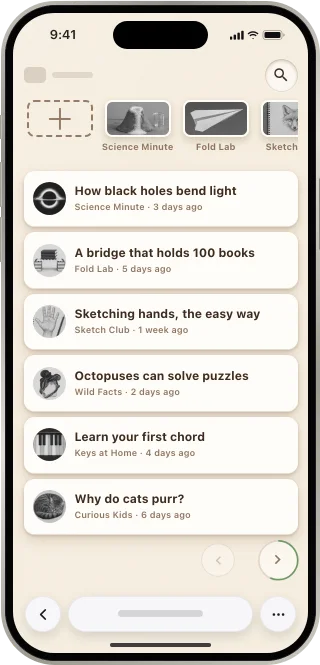
We're building Idlewild for iPhone and iPad so the phone goes back to being a useful tool instead of a bottomless scroll, leaving room for everything else in the house.

 Idlewild